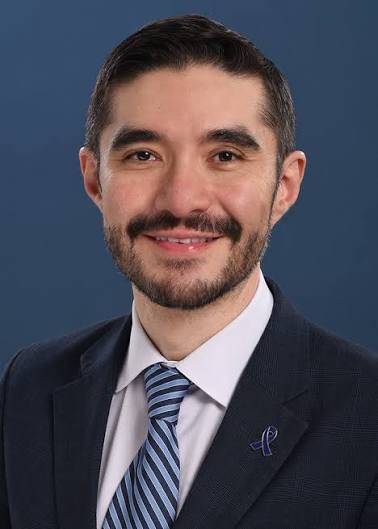
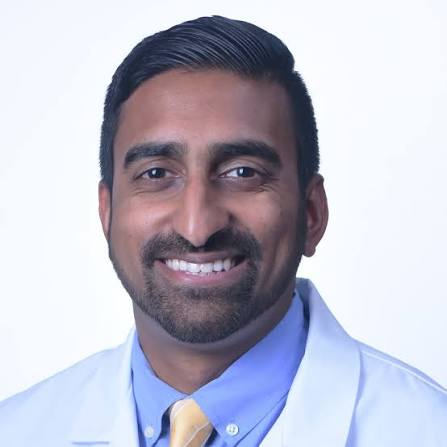
Drs. Matthew Kurian and Arturo Loaiza-Bonilla discuss how Massive Bio uses neurosymbolic and multi-agent AI to improve oncology clinical trial matching and enrollment. They highlight advances in matching accuracy, reducing enrollment barriers, and expanding clinical trial access for patients in community oncology settings.
Transcript:
Dr. Kurian: You’ve been transforming oncology clinical trials through your work at Massive Bio, through neurosymbolic multi-agent AI and oncology-specific knowledge graphs as well. So can you walk us through exactly how Massive Bio’s technology works and how it’s a little bit different than the traditional clinical trial search platforms that we have that unfortunately are not exactly up to par yet?
What do you think you guys are doing that may be different than others?
Dr. Loaiza-Bonilla: Yes, happy to always talk about it because it’s a passion of mine every day. As a practicing oncologist, I felt there was a really major need to optimize workflows when it comes to clinical trials, right?
We have a limited amount of time in our own practices. Also, our coordinators cannot be screening every single patient in the practice, and we have seen millions of dollars being invested in efforts like IBM Watson in the past, and they came to nothing.
So I saw it as a twofold strategy. One is that we need to really optimize matching itself, just to make it really clear and interoperable so it can be done by someone who has Epic or any other EMR. It doesn’t matter. Or they can fax it, send it out to us, and we simply review it.
Then after that, solving the last-mile component, which is once the patient is found to have a match, we really put the patient into the trial because that’s in their best interest, because they’re eligible and the patient is motivated. We cannot let the intricacies of the logistics, which are really challenging, take that away.
So as we democratize that, one example is we’ve been working with the American Cancer Society. They vetted a bunch of different vendors and selected us, and every single patient who goes to the American Cancer Society looking for a trial, we give them an AI report.
What makes us different is that we use these neurosymbolic architectures that you mentioned. Natural language processing, which is basically just reading from the paper and whatnot, is very commoditized, and anyone can do it. But the component of the symbolic architecture is the ground truth.
Basically, if you have a ton of manually reviewed, tagged, and labeled clinical trials and data from patients and use that as the knowledge graph, you can use it as ground truth and really tell that this is an accurate match for that specific variable. Then we can use the best of both worlds.
We can use the best of the manual review that already took place, which is the symbolic component, the yeses and nos, the binary zeros and ones, and we can use generative technologies such as LLMs and beyond to extract data in real time, keeping us grounded by using the combination of both.
So the future is having higher accuracy, and we call these F1 scores, where whatever is closer to 0.99 is the closest to reality, which is what we’re trying to accomplish.
We presented some data in ESMO Real World Data and Digital Oncology this year, where we had 3,804 patients who went through the whole platform end-to-end. (Data updated).
So we improved the clinical trial matching to an F1 score of 0.82 at that time. Now we use multi-agent AI, basically agents doing each one of those components. This platform called Reticulum Nexus is like a foundry of agents, and we just deploy them to each one of the components of the cancer journey of the patient.
There’s an orchestrator that is able to say, “Okay, now I have everything ready. This is a fully eligible patient. Now go and enroll the patient.”
So that’s the differentiator. It’s closer to reality, and with the advent of agentic AI, we were able to leverage it in an appropriate way.
I think it’s commoditized, but what is important is that we have been focusing on oncology only. So when you have data from over 200,000 patients, things become really easy for the system to be effective and successful.
We’ll be in 26 countries at the end of this year with all this work. But I’m always happy to talk about it because I think there are a lot of collaboration opportunities here, and we cannot do it by ourselves. It has to be together with people.
Dr. Kurian: Absolutely. I agree with you, and I think both of us coming from community systems, right? This is such an incredibly important topic in the sense that we need help within the community to identify patients.
Our resources are much more limited than major academic centers as well, and we can run trials, and we can do it just as well, but we need that additional help. I think tools like yours are going to help the community specifically too.