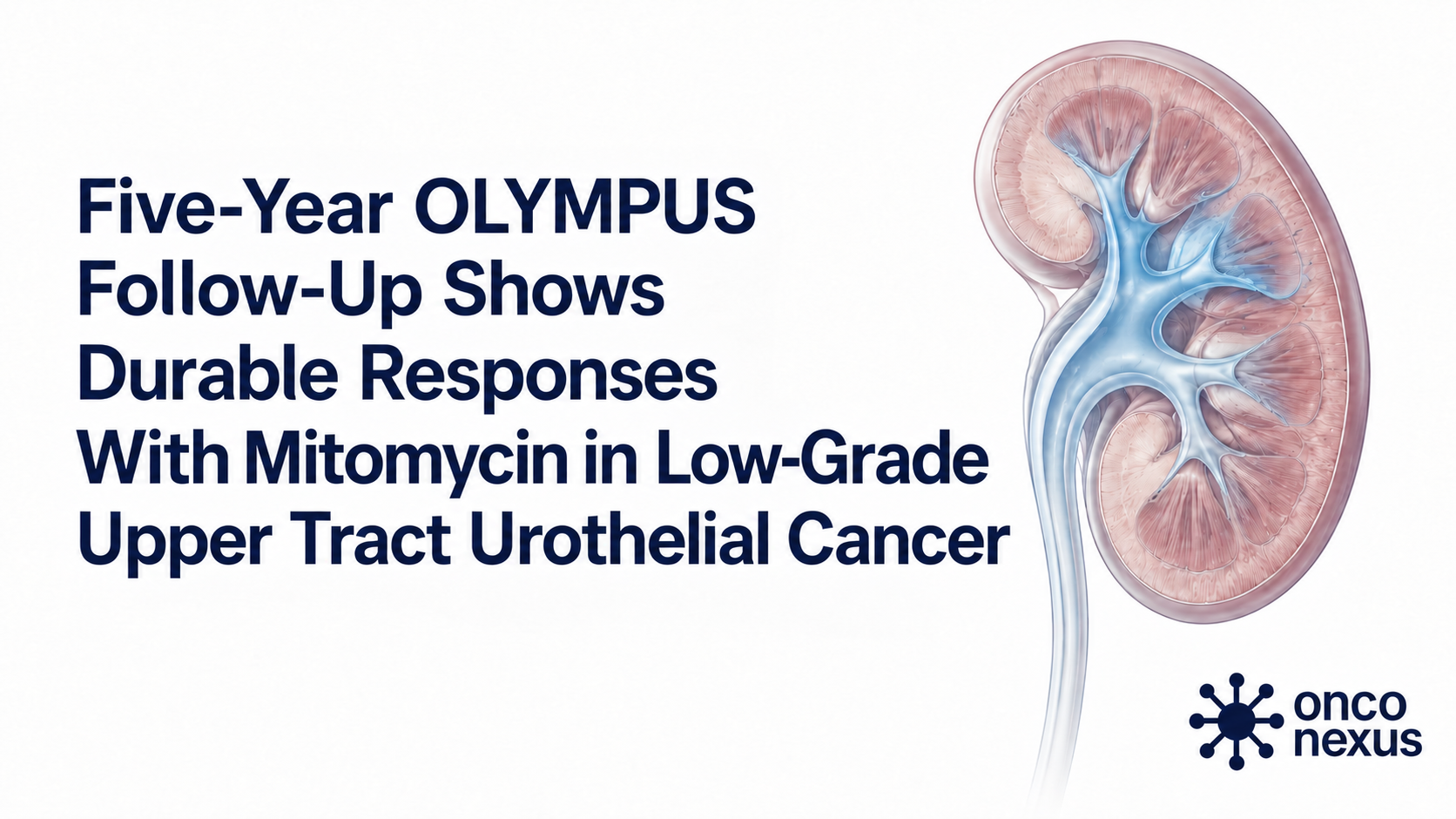
UroGen Pharma announced the publication of final results from the OLYMPUS long-term follow-up study, reporting extended durability of response with mitomycin (JELMYTO) for pyelocalyceal solution in adult patients with low-grade upper tract urothelial cancer (LG-UTUC). The findings were published in Therapeutic Advances in Urology on October 28, 2026.
Among the 20 patients who entered the long-term follow-up study, 75% (15/20) remained event-free as of March 2025, with a median follow-up of 53.3 months. No progression to high-grade disease was observed during extended follow-up. The analysis was limited to patients who had previously achieved a complete response following primary chemoablation with mitomycin, and the relatively small patient numbers should be considered when interpreting these results.
Key finding
In the 20 LG-UTUC patients who entered the OLYMPUS long-term follow-up study, 75% remained event-free at a median follow-up of approximately 53 months, and median duration of response was not estimable due to the low event rate, though the analysis was confined to prior complete responders and the cohort was small.
Study Design
| Trial | Olympus long-term follow-up study |
|---|---|
| Population | Adult patients with LG-UTUC who achieved a complete response following primary chemoablation with mitomycin in the original Olympus trial (N=41 complete responders; 20 entered long-term follow-up) |
| Treatment | Prior treatment with mitomycin for pyelocalyceal solution; long-term follow-up study assessed durability in prior complete responders |
| Primary endpoint | Not specified |
| Key secondary endpoints | Duration of response; event-free status; progression to high-grade disease |
The OLYMPUS long-term follow-up study extended observation of patients from the original OLYMPUS trial who had achieved a complete response after mitomycin treatment. The five-year follow-up analysis builds on previously published OLYMPUS findings; primary endpoint definitions were not disclosed.
Results and Safety
Across all 41 OLYMPUS trial patients who achieved a complete response, the median duration of response was 47.8 months, with a median follow-up of 28.1 months (95% CI: 13.1, 60.1). Among the 20 patients who entered the long-term follow-up study, median follow-up was 53.3 months (95% CI: 27.9, 72.8), and the median duration of response was not estimable (95% CI: 43.5, not estimable), due to the low event rate. As of March 2025, 75% (15/20) of patients in the long-term follow-up study remained event-free.
Notably, no progression to high-grade disease was observed during extended follow-up in either the full complete-responder group or the long-term follow-up cohort. Safety data from the long-term follow-up period were not disclosed in the announcement.
Clinical Context
LG-UTUC has historically been managed with nephroureterectomy, a surgery that sacrifices the affected kidney. Mitomycin’s FDA approval represented a kidney-sparing endoscopic alternative, and these five-year follow-up data add to the evidence base supporting its long-term chemoablative effect in patients who respond to initial treatment. Lead author Phillip Pierorazio, MD, of Penn Presbyterian Medical Center, noted that the sustained disease control provides additional evidence supporting the long-term benefits of the approach.
UroGen’s Chief Medical Officer Mark Schoenberg, MD, indicated the company is also awaiting real-world data from the uTRACT Registry, which may provide broader insight into outcomes across a less-selected patient population than a clinical trial cohort. Key questions that remain unanswered include long-term safety outcomes, outcomes in patients who did not achieve a complete response, and how mitomycin compares directly to surgical management over extended follow-up.
Sources
- UroGen Pharma. “UroGen’s Final Results from OLYMPUS Five-Year Follow-Up Study Reinforces Durable Response with JELMYTO in Patients with Low-Grade Upper Tract Urothelial Cancer.” Press release. October 28, 2026. View source